


Flags of All World Countries
4.4542.00 Reviews
App Specs
- Version
- 3.9.0
- Updated On
- License
- Free
- Downloads
- 10,000,000+
- Developer
- Andrey Solovyev
- Categories
- Trivia
- Platform
- Android, iOS
Screenshots
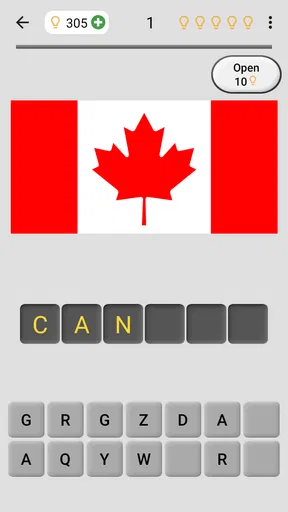
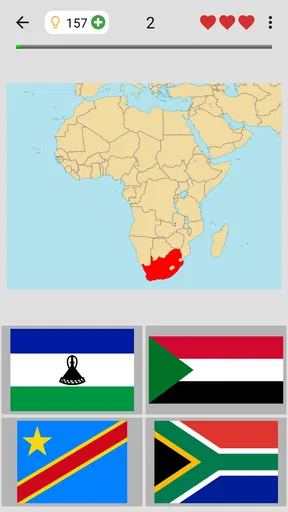
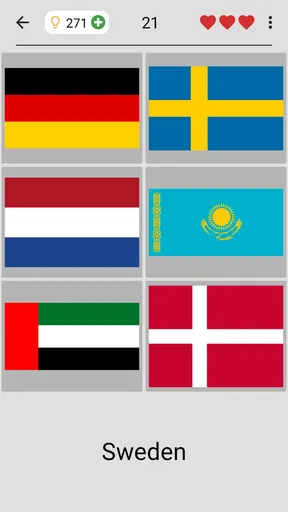
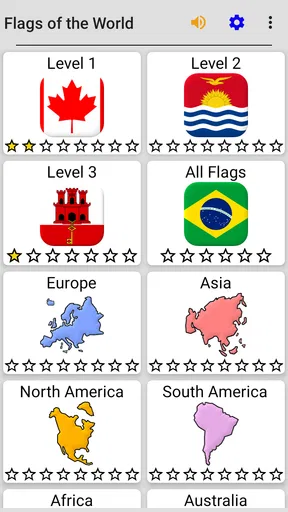
 Analysis by AppCompare
I like trivia games that give me something concrete to learn rather than asking me to memorize a blur of unrelated facts. Flags of All World Countries has a clear focus: recognizing national flags and connecting them with the countries they represent. In my experience, that makes it an easy game to dip into for a few minutes, whether I’m brushing up on geography or settling a friendly argument. It is a free trivia game from Andrey Solovyev, rated for Everyone, with a 4.5 average from around 83,000 ratings and over 10 million installs. That broad appeal makes sense, though its focused subject is also the main reason it won’t suit every player.
A simple routine that makes practice stick
I get the most from the game when I treat it as a short, repeatable practice session rather than a test I need to finish in one sitting. I look closely at a flag, say my guess before choosing, and then pause on any answer I missed. That small habit turns recognition into active recall: instead of simply spotting a familiar design, I have to retrieve the country name myself. It is especially useful for flags that share familiar colors or shapes, where a quick glance can lead me to a confident but wrong answer.
A realistic use is a spare moment before class, during a commute, or while waiting for someone. I can play a few questions, notice which flags I mix up, and return to those later. The short-session approach is more practical than trying to cram a whole world map into one evening. It also makes the game easy to share with a friend: take turns naming a flag, then explain what detail helped you decide. I find that talking through the clue is more memorable than racing to tap the answer first.
What to check before settling into a session
The game is in English, so I would check that the language suits whoever is playing, especially if it is being used with a younger learner or in a multilingual household. The subject itself is visual, but country names and quiz prompts still matter. It is currently version 3.9.0 and requires Android 6.0 or later, so I would check device compatibility before planning to use it on an older Android phone. The game is free to start, with optional in-app purchases ranging from $0.99 to $5.99 per item; I would look at the purchase prompts with a child before handing over the device.
I also recommend deciding what “getting better” means before a session. If the goal is to recognize flags, pause long enough to inspect their colors and layout. If the goal is speed, answer promptly, but accept that fast guesses may reinforce mistakes unless you review them. That distinction is easy to overlook in a quiz game: a high score can feel like learning, but deliberate correction is what helps me remember the flags afterward.
How to get more from flag quizzes
I use a simple rule to make flag quizzes more than a guessing game: before tapping, I name one visual detail that supports my answer, then check whether that clue actually distinguishes it from similar designs. That habit is especially useful when I’m playing in short bursts, because it gives each question a purpose and makes uncertainty easier to remember. In the next section, I’ll look at how to turn those small observations into a steady practice routine.
Turn lookalikes into useful clues
Flags with similar colors can blur together when I rely on color alone. I get better results by checking the arrangement, the number and placement of shapes, and any distinctive emblem before settling on a country. After a mistake, I try to describe the feature that separates the correct flag from the one I chose. This is a practical way to build a mental cue without needing a separate notebook, and it helps me avoid repeating the same snap judgment next time.
Worth Reading Before You Choose

Baby Panda World Brings Quick Play to Modern Phones, but Its Game Library Feels Busy

ESPN’s Live Game View Makes Following Close Games Easier

QuizzLand Review: A Good Fit for Short Trivia Breaks, Not Every Player

Basketball Stars: Multiplayer Is Fast, but Can It Recover When Matches Go Wrong?

WEBTOON Turns Phone Updates Into a Better Reading Routine

Link to Windows Runs on Shared Habits, Not Social Feeds
There is also a useful trade-off between broad practice and focused review. Moving through many different flags keeps a session lively, but revisiting the countries I hesitate over is more effective when I want to improve a weak spot. I would use the broader quiz play for a casual challenge and slow down when I notice a recurring confusion. The game’s core appeal is that flags provide immediate visual feedback; the learning depends on whether I take a moment to use that feedback.
Where it fits among geography games
Compared with a general geography quiz, this game gives flags the whole stage instead of mixing them with capitals, borders, population facts, or map questions. That narrow scope is a plus when I want visual recognition practice, and a limitation when I want a broad geography lesson. A map-based game is a better choice for learning where countries sit next to one another; a broader quiz is better for testing capitals and other facts. I see this one as a focused companion, not a replacement for every kind of geography study.
It also works differently from passive reference browsing. Looking up a country can answer one question quickly, while a quiz asks me to recall an answer before I see it. When I am unsure, I prefer to make a considered guess and then check the result rather than searching immediately. That creates a small learning loop: attempt, correction, and another look. If I only want a reference tool or detailed historical research, a dedicated atlas or encyclopedia will be more suitable than a trivia game.
Where the experience can fall short
The game’s narrow subject can become repetitive for someone who wants new kinds of questions every session. A player who already recognizes most national flags may also find that the challenge fades unless they enjoy polishing speed and accuracy. I would skip it if I wanted multiplayer competition, a broad curriculum, or a detailed map lesson; those are different needs, and a flag quiz cannot cover them all. For younger players, the Everyone rating is reassuring, but I would still supervise purchases and check that the English prompts are comfortable for them.
There are occasional ads, and I found that flag images can sometimes take a moment to load. Neither issue ruins a brief session, but both can interrupt the rhythm if I am trying to move quickly. I would not choose it for a presentation workflow based on dependable export or image handling; a dedicated image source is a better fit for that job. The app’s strongest use is learning through quizzes, not serving as a professional design or research tool.
Small habits for confident recognition
For a more useful practice routine, I would group my attention around the mistakes rather than simply replaying questions at speed. When two flags seem alike, I name the exact distinction aloud: a band’s orientation, a central symbol, or the placement of a shape. I then revisit the pair later in the same session if it comes up. This method is more deliberate than tapping quickly, but it is also less likely to leave me with a vague feeling that I “almost know” the answer.
Another helpful habit is to stop while I am still paying attention. A short session in which I review a few uncertain answers is more valuable to me than a long run where I start guessing carelessly. If I am playing with someone else, we can alternate between answering and explaining the clue; that keeps the activity social without needing to turn it into a formal contest. The game is particularly handy for a parent or teacher looking for a compact visual prompt, provided they are ready to add context and discussion themselves.
Discovering the World One Flag at a Time
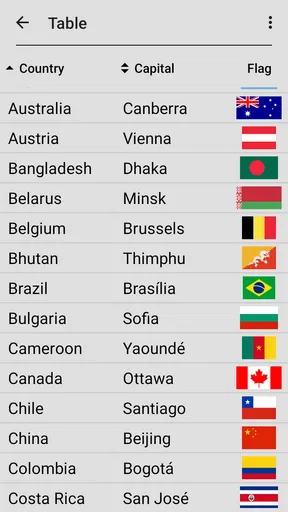
Upon firing up the app for the first time, I was greeted with a vibrant splash screen showcasing a colorful array of flags. Right off the bat, Flags of All World Countries promised a visually appealing journey. The user interface is clean and intuitive, making it easy to navigate through the different sections. It’s like having a pocket-sized flag encyclopedia right at your fingertips.
An Educational Treasure Trove
What really caught my attention was how educational the app is. Each flag comes with a detailed description, providing insights into its history, colors, and symbols. For instance, did you know that the red on the Nepalese flag symbolizes the rhododendron, the national flower? I sure didn’t until I used the app! This feature makes it a fantastic tool for students, educators, or just about anyone with a thirst for knowledge.
The app also includes a neat feature where you can test your knowledge with flag quizzes. Whether it’s identifying flags by country or matching flags to their respective continents, these quizzes are both fun and challenging. It’s a great way to learn and remember the flags, and you might even end up impressing your friends with your newfound expertise.
Features That Stand Out
Beyond the educational content, there are a few features that make this app a standout. Firstly, the search function is a breeze to use. Type in any country, and you’re instantly provided with its flag and related information. The app also supports multiple languages, broadening its accessibility to a wider audience. This is a huge plus for non-English speakers who want to delve into the world of flags without language barriers.
Another notable feature is the ability to download your favorite flags. Whether you’re creating a presentation, designing a project, or simply want to have a collection of flags on your device, this feature is incredibly handy. You can also share flags directly from the app to social media or messaging platforms, making it easy to spread the flag love.
A Few Hiccups Along the Way
Now, as much as I enjoyed using Flags of All World Countries, it’s not without its quirks. I did notice that the app can be a bit sluggish at times, especially when loading flag images. It’s not a dealbreaker, but it can test your patience if you’re in a hurry. Additionally, while the app is free, there are ads that pop up occasionally. They’re not overly intrusive, but if you’re someone who prefers an ad-free experience, you might find them a tad annoying.
Final Thoughts
All in all, Flags of All World Countries is a delightful app that combines education with entertainment. It’s perfect for anyone looking to expand their geographical knowledge or just appreciate the beauty of flags from around the globe. Despite a few minor drawbacks, the app’s comprehensive content and user-friendly interface make it a worthy download. So why not give it a whirl? You might just find yourself becoming a flag enthusiast!
As a trivia game, its best quality is the clear connection between a visual clue and a piece of knowledge I can carry into everyday conversation. I would recommend it to curious learners, families who enjoy quick quiz rounds, and anyone who wants a lightweight way to practice identifying flags. I would not recommend it as a substitute for an atlas, a full geography course, or a reference library when accuracy and deeper historical context are the priority.
My overall advice is to use it with a small goal: learn a few unfamiliar flags, identify the details that distinguish confusing designs, or enjoy a quick challenge with a friend. The game has been around since August 31, 2014, and its 10 million-plus installs suggest that the focused idea has found a large audience. For me, its value is less about completing every quiz and more about turning a passing glance at a flag into a question worth answering.
Pros
- Extensive global flag database.
- User-friendly interface design.
- Includes educational quizzes.
- Offline access available.
- Regular content updates.
Cons
- Ads can be intrusive at times.
- Limited customization options.
- No multiplayer quiz mode.
- Occasional loading delays.
- Requires initial data download.
FAQs for Flags of All World Countries
What features does the Flags of All World Countries app offer?
The Flags of All World Countries app provides users with a comprehensive collection of flags from every country around the globe. It includes detailed information about each flag, such as historical background, colors, and symbolism. The app also offers quizzes and puzzles to help users learn and test their knowledge about world flags.
Is the Flags of All World Countries app suitable for educational purposes?
Yes, the app is highly suitable for educational purposes. It serves as an excellent resource for students and educators to learn about geography and national symbols. The interactive quizzes and detailed flag descriptions make it an engaging tool for both classroom and self-study environments.
Does the app require an internet connection to function?
The Flags of All World Countries app can be used offline, allowing users to access flag information and quizzes without an internet connection. However, for updates and any new content, an internet connection is required. This makes it a convenient app for travel or areas with limited connectivity.
Are there any in-app purchases or advertisements in the app?
The app offers a free version that includes basic features and may contain advertisements. Users can choose to upgrade to a premium version for an ad-free experience and access to exclusive content, such as advanced quizzes and additional flag-related information. This helps support the app's development and maintenance.
How user-friendly is the Flags of All World Countries app for beginners?
The app is designed with a user-friendly interface that makes it easy for beginners to navigate. Clear categories, intuitive controls, and helpful tutorials ensure that users can quickly find the information they need. The app’s design caters to users of all ages, making it accessible and enjoyable for everyone.


